
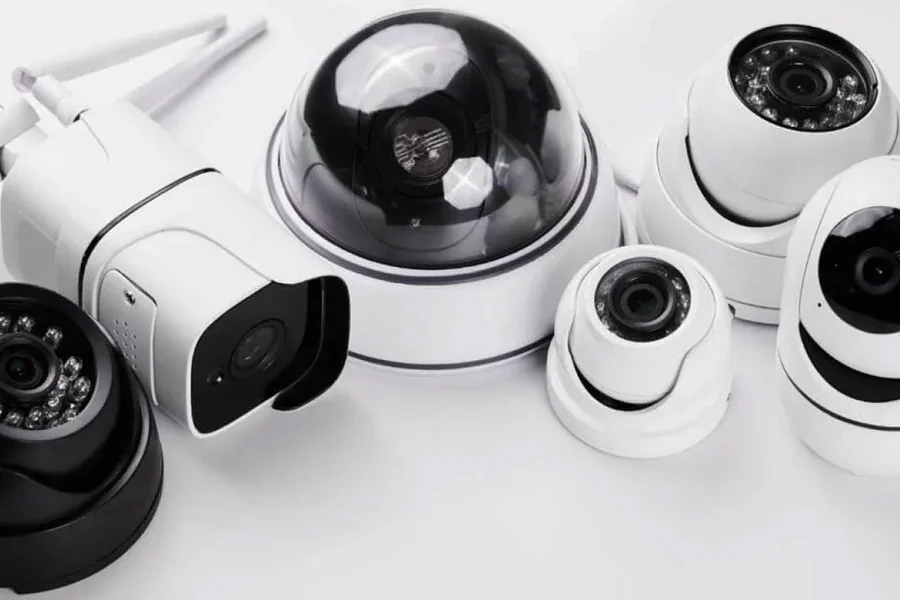
The increasing security concerns have resulted in an increased use of surveillance systems globally.
The global video surveillance market will reach a value above 100 billion US dollars by 2030 because all residential areas and commercial establishments and public infrastructure facilities now use video surveillance systems.
Reports show that crime prevention systems with CCTV technology can decrease property crime rates by 20% to 30% in areas where they are installed, which makes them essential components of modern security systems.
CCTV systems function as essential components needed to establish complete surveillance systems. The different types of CCTV cameras operate in distinct ways, which provide various functional capabilities. The security system uses many different surveillance cameras that work according to where they are placed and how they handle security and their responsibility towards the surveillance monitoring function.
Let’s break down the different types of CCTV cameras and how they work.
Understanding CCTV Cameras
CCTV cameras operate as security systems which permit users to monitor and record every event occurring in their designated area. The system transmits CCTV footage to an exclusive network, which allows users to watch the live feed or access recorded content at a later time.
Users can access modern CCTV systems through their smartphones or computers because the systems connect to digital recorders and cloud storage.
Dome Cameras
Dome cameras serve as the most frequently used surveillance equipment for both home and business environments. They were named dome cameras because their convex hull shape makes it difficult to guess where the camera is looking.
Key Features:
- Discreet design suitable for indoor use
- Wide viewing angles
- Vandal-resistant casing in many models
Best for:
Retail stores, offices, hotels, and indoor home security
Dome cameras are reasonably common and well-used since they blend into their environment quite effectively but still maintain good coverage surveillance-wise while possessing that simple appearance.
Bullet Cameras
Bullet cameras function as extended cylindrical recording devices which allow users to view objects located at far distances. The cameras display high visibility, which acts as a security measure to prevent potential intruders from entering.
Key Features:
- Long-range visibility
- Weatherproof design for outdoor use
- Easy installation on walls or ceilings
Best for:
Outdoor areas such as parking lots, building perimeters, and driveways
Bullet cameras are ideal for monitoring specific areas from a distance.
PTZ Cameras (Pan-Tilt-Zoom)
PTZ cameras give users advanced functions which enable them to operate the cameras from distant locations through their ability to pan tilt and zoom in on particular regions.
Key Features:
- 360° horizontal rotation
- Vertical tilt movement
- Optical zoom for detailed viewing
- Remote control via software or apps
Best for:
Large areas such as stadiums, airports, warehouses, and public spaces
PTZ cameras are preferable in professional surveillance systems than generic video cameras; the overall reason behind this is to have video monitoring at its fullest.
IP Cameras (Internet Protocol Cameras)
IP cameras transmit video data through internet and local network connections instead of using traditional analog cables for transmission. This type of surveillance camera has smart features that make it one of the faster-growing choices on the market.
Key Features:
- High-definition video quality
- Remote access via mobile devices
- Cloud storage options
- Easy integration with smart systems
Best for:
Smart homes, offices, and businesses needing remote monitoring
IP cameras will dominate surveillance systems as digital security systems keep on expanding.
Wireless CCTV Cameras
Wireless cameras connect to a network using WiFi instead of physical cables.
They are popular for their easy installation and flexibility.
Key Features:
- No complex wiring required
- Mobile app connectivity
- Flexible placement options
- Often battery or solar-powered
Best for:
Residential homes, temporary setups, and rental properties
With that said, a strong internet connection might be required for these devices to function effectively.
Infrared (Night Vision) Cameras
Infrared cameras are designed for low-light or complete darkness conditions.
They use infrared LEDs to capture clear images at night.
Key Features:
- Night vision capability
- Black-and-white or enhanced low-light imaging
- Reliable 24/7 surveillance
Best for:
Outdoor security, warehouses, and areas with poor lighting
Ideal for spying and surveillance in total darkness even without infrared light.
Hidden (Covert) Cameras
A covert camera has to blend into the surrounding or remain completely hidden.
Key Features:
- Small, discreet design
- Can be hidden in everyday objects
- Used for covert surveillance
Best for:
Investigations, sensitive monitoring, and security testing
Due to privacy concerns, their use is often regulated depending on location.
Key Benefits of CCTV Systems
Modern CCTV systems provide several important benefits:
- Crime prevention and deterrence
- Real-time monitoring of properties
- Evidence collection for investigations
- Remote access via mobile devices
- Improved safety for homes and businesses
Theft and vandalism at residential and commercial sites are considerably reduced by visible surveillance.
How to Choose the Right CCTV Camera
Choosing the right CCTV camera depends on your security needs:
1. Location
Indoor and outdoor environments require different camera types.
2. Coverage Area
Large spaces may need PTZ or multiple cameras, while small areas may only need dome or bullet cameras.
3. Video Quality
Look for at least 1080p HD resolution, though 2K and 4K options offer better clarity.
4. Night Vision Capability
Essential for 24/7 monitoring.
5. Connectivity
Choose between wired, wireless, or IP-based systems depending on setup flexibility.
6. Storage Options
Decide between local DVR/NVR storage or cloud-based storage systems.
Wired vs. Wireless CCTV Cameras
The most crucial choice in security system setup occurs when people decide between wired and wireless CCTV cameras. The security system establishment process begins with the selection of wired or wireless CCTV cameras, which constitutes a decision that holds great importance. The two options provide effective security solutions, but their installation process, system dependability, video performance and installation flexibility show different outcomes.
Wired CCTV cameras establish a direct connection to recording devices through physical cable links, which connect to both digital video recorders and network video recorders. The cables function to transmit video signals while also delivering power to the system.
Wired systems achieve their reputation for dependable performance because their setup enables constant power supply through their direct link to equipment. Wireless CCTV cameras use WiFi to send video data because they lack physical cable connections. Some devices operate using a power cable while others function without any wires through battery power.
The system connects to mobile applications and cloud storage to provide users with worldwide monitoring capabilities. The process of selecting the optimal lighting system for your home or business requires knowledge of these distinctions between different systems.
What Are the Best CCTV Cameras for Your Business?
Your business needs particular CCTV camera types which must match your environmental conditions and their performance capabilities and functional attributes should be assessed. Experts evaluate business cameras based on video quality, storage options, scalability, and reliability, especially for commercial use.
The most important factors are video resolution requirements, which require at least 1080p or 4K resolution, together with night vision and AI detection and weather resistance. The current systems provide smart analytics features that enable human and vehicle detection capabilities that decrease false alarm rates by more than 90 percent when compared to standard motion detection systems.
Best Practices for CCTV Installation
To maximize performance:
- Install cameras at elevated positions for better visibility
- Avoid pointing cameras directly at strong light sources
- Ensure stable internet connection for IP or wireless systems
- Regularly clean camera lenses for clear footage
- Secure all devices with strong passwords and updated firmware
Proper installation will indeed improve surveillance effectiveness and system reliability.
Final Thoughts
Security systems built for protecting homes and businesses and public spaces function with CCTV cameras, which act as their fundamental elements. Users can select security solutions from different camera types, which include dome cameras, bullet cameras, and advanced IP and PTZ systems.
The development of surveillance technology has reached a new level because CCTV systems now operate with greater efficiency through their new features, which include AI detection, remote monitoring and cloud storage capabilities.
